Your Guide to a Killer White Label SEO Audit

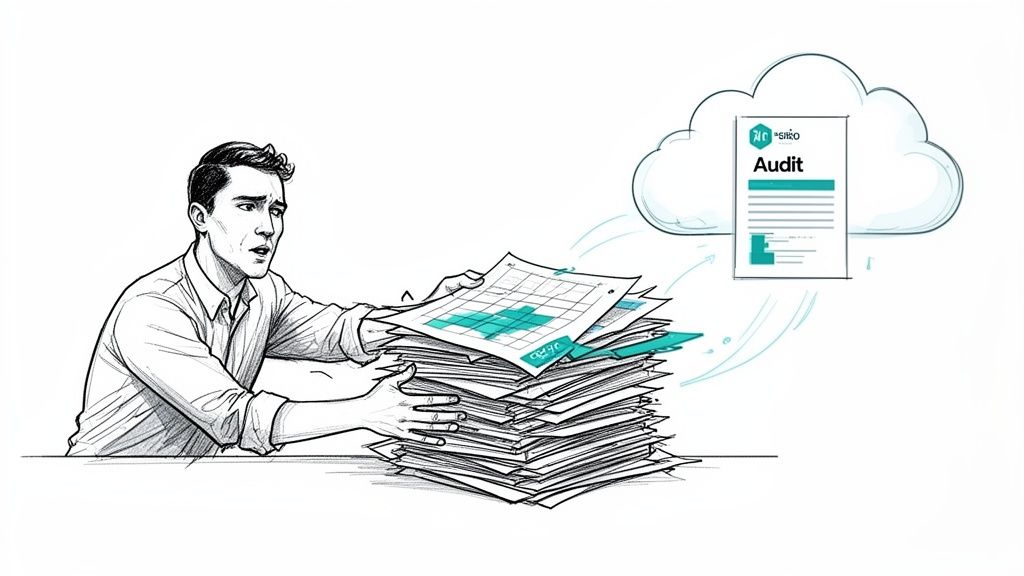
Let's be real, you'd rather be dreaming up brilliant strategies than getting lost in spreadsheets at midnight. A white label SEO audit is your golden ticket out of that mess. It’s how you deliver a seriously deep site analysis to clients, all wrapped up in your own branding, without personally crawling a single URL. It's like having a magic SEO elf do all the work while you take the credit.
Escape the Reporting Grind with White Label Audits
Picture this: an on-demand SEO department doing all the boring, heavy lifting for you. You get to offer a must-have service, look like a total rockstar, and actually spend time on the parts of your job you don't hate—like, you know, winning new business and chatting with clients.
Instead of drowning in technical gobbledygook and a sea of data points, you get a clean, actionable report that uncovers real, money-making opportunities for your clients.
This guide is your new best friend. We'll skip the fluff and walk through the real-world steps to create and deliver reports that not only wow your clients but also get them to actually do something. The secret sauce is understanding the power of professional SEO audit services that you can slap your own brand on.
This simple diagram breaks it down: your white-label buddy handles the grunt work, you add your snazzy branding, and your client is totally blown away by the insights. Easy peasy.
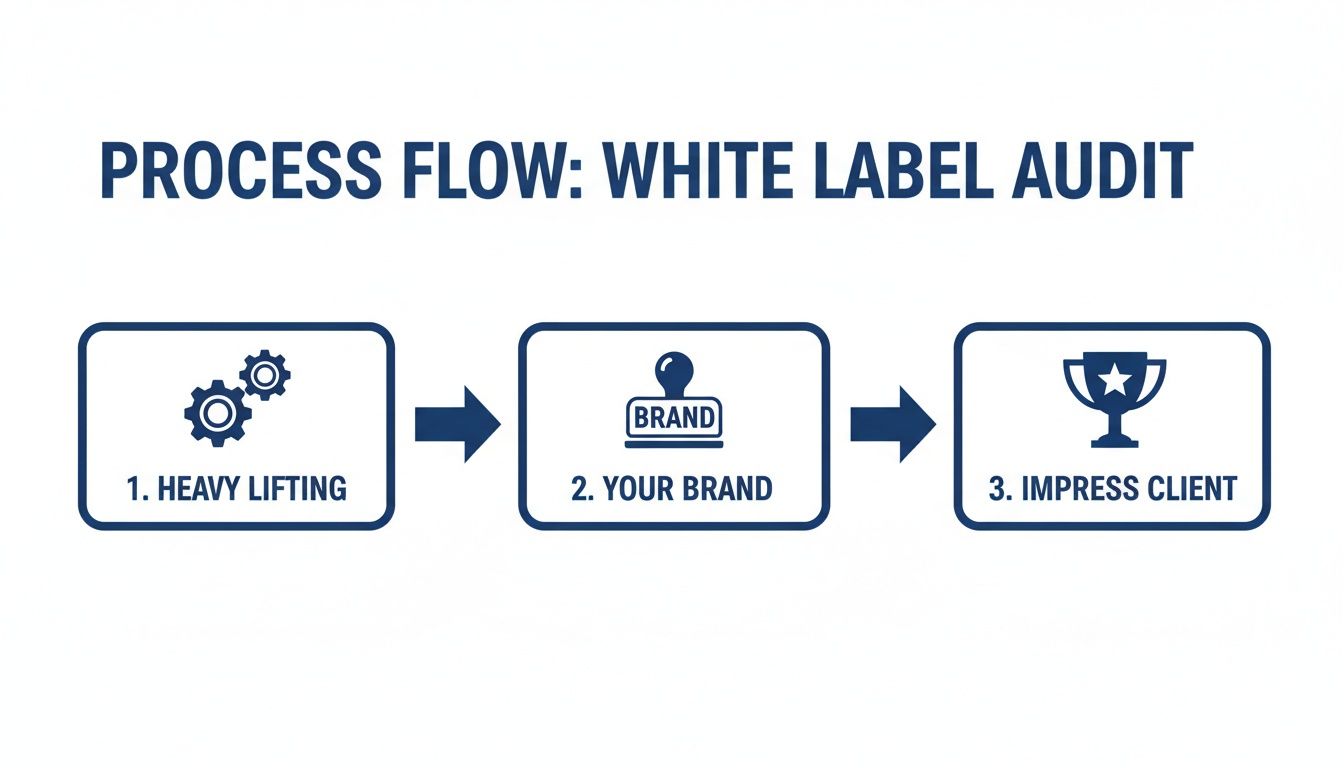
The biggest win here is just pure, unadulterated efficiency. You’re basically buying back your time while making your agency look bigger and better.
Why This is a Big Deal for Your Agency
So, what does this actually do for your bank account? The numbers are pretty convincing. According to research from UpCity, agencies using white-label SEO services can see profit margins up to 50% or higher on those services. Not too shabby, right?
With nearly 60% of small businesses investing in SEO, it's clear this is more than just a passing fad. If you're not offering it, you're leaving cash on the table.
This isn't just about handing off a task; it's a slick strategic move to boost your profits and service quality at the same time. You get to focus on being the brilliant strategist while your partner wrestles with the technical gremlins.
Adding a white-label SEO audit to your menu isn't just another thing to sell. It's a powerhouse tool that opens up new conversations and makes clients trust you more.
- Become the One-Stop-Shop: Clients are lazy (in a good way!). They love convenience. By offering audits, you keep them in your world instead of watching them wander off to a competitor for SEO help.
- Unlock Your Best Sales Tool: A juicy audit is the perfect icebreaker. Every single problem it uncovers is a service you can sell, from writing cool content to fixing nerdy tech stuff.
- Build Authority and Trust: Handing over a professional, data-packed audit shows you mean business. It makes you look like a strategic partner, not just some person they pay every month.
Ultimately, using these audits is one of the smartest ways to grow your agency's revenue without having to hire more people and deal with more headaches. You can get the full scoop on this model in our deeper dive on white label reporting.
Your No-Nonsense SEO Audit Checklist
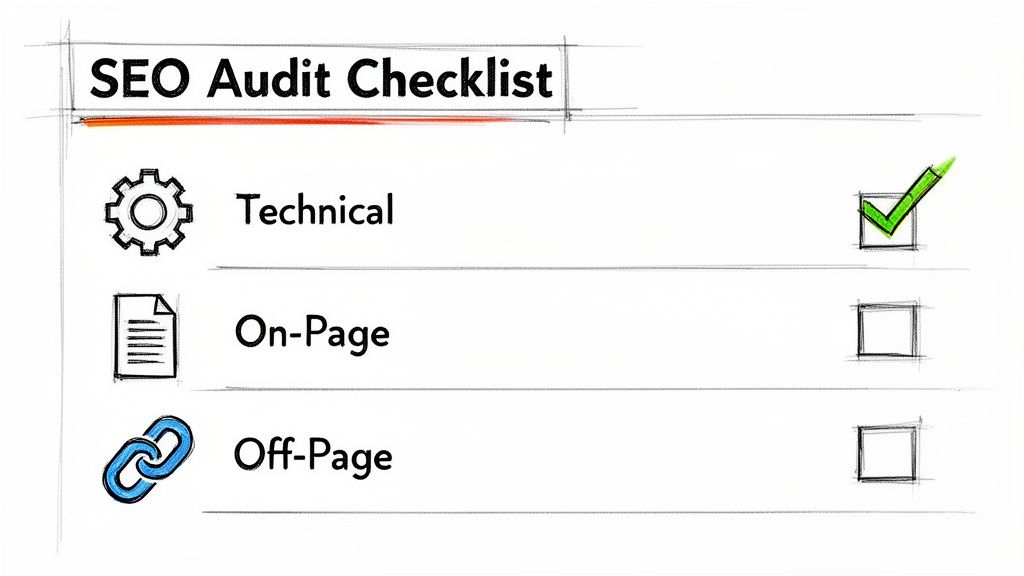
Walking into an audit without a checklist is like trying to build IKEA furniture without the instructions. You'll end up with a weird-looking coffee table and a lot of regret. A proper white-label SEO audit needs a game plan, broken down into the big three pillars every website is built on.
Think of yourself as a website doctor giving a site its yearly check-up. You need to check its bones (Technical SEO), its brain and how it talks (On-Page SEO), and its reputation around the neighborhood (Off-Page SEO). Miss one, and you might completely miss what's making the site sick.
This checklist makes sure you cover all the bases, from the super-nerdy backend stuff to the pretty content your client actually sees. It’s how you find both the quick wins and the huge, game-changing opportunities.
Technical SEO: The Engine Room Inspection
First things first, let's pop the hood. Technical SEO is all about making sure search engines can find, crawl, and understand a site's pages without getting a headache. If Google’s little robot spiders get lost or confused, nothing else you do matters. It's like having the world's best party in a secret basement with no door.
Here’s what you need to hunt down:
- Mobile-Friendliness: How does the site look on a phone? With Google reporting that over 60% of searches happen on mobile, a clunky experience is a total deal-breaker.
- Crawlability & Indexability: Can search engines even find the website? Check for
robots.txtfiles that are accidentally blocking important pages or "noindex" tags hiding your best content. - Site Speed: If a page takes longer than three seconds to load, over half your visitors are already gone, according to Google research. Tools like their PageSpeed Insights will tell you if the site is a race car or a rusty tricycle.
- XML Sitemaps: This is the literal roadmap you give to search engines. Is it current, or is it sending Google on a wild goose chase to pages that died in 2012?
A technical audit isn't about finding every single tiny mistake. It's about spotting the giant roadblocks that are actively crushing the site's ability to rank. Fix these first, and everything else has a chance to work.
For an even deeper look at the techy side, our competitor SEO audit checklist can be a huge help for seeing how your client stacks up.
On-Page SEO: What the Site is Actually Saying
Once the engine is purring, it's time to check what the site is actually saying—to both people and robots. This is all the on-page stuff: the words, the keywords, and how the site is organized. It’s where you make sure the site is talking about the right stuff in the right way.
Honestly, this is where the money is. An extensive Backlinko study of 11.8 million Google search results found a clear link between things like keyword-rich title tags and higher rankings. This slice of the pie shows why a detailed on-page checklist is an absolute must-have for a valuable audit.
- Title Tags & Meta Descriptions: Are they unique and interesting? Do they use target keywords without sounding like a robot wrote them? Or are they just stuffed with nonsense that no human would ever want to click on?
- Content Quality: Does the content actually help someone, or is it just fluffy filler? Be on the lookout for thin, duplicate, or boring pages that could be dragging the whole site down.
- Internal Linking: Is the site smartly linking its own pages together? A good internal linking structure is like having a helpful tour guide for both users and Google, showing them where all the best stuff is.
Off-Page SEO: The Site's Street Cred
Finally, you need to check the site's reputation out on the wild web. Off-page SEO is mostly about backlinks—who is linking to the site and why. It’s the difference between a high-five from a trusted expert and a weird shoutout from some spammy, random blog.
- Backlink Profile Quality: Are the links coming from legit, relevant websites? Or are they from sketchy link farms in the internet's spooky back alleys?
- Referring Domains: It's way better to have 10 links from 10 different good sites than 10 links from one site. A diverse backlink profile just looks more natural and trustworthy to Google.
- Anchor Text Analysis: What words are other sites using to link back? A healthy profile has a nice mix of brand names ("Your Client Inc.") and keyword-rich phrases ("best dog walking service").
Choosing Your SEO Data-Gathering Tools
Guessing is fun for "how many jellybeans are in the jar," not so much for winning over clients. To build a killer white label SEO audit, you need to trade your magic 8-ball for cold, hard data. Flying blind is a recipe for looking silly; the right tools are what make you look like a pro instead of an amateur.
First up, the dynamic duo from Google itself: Google Search Console and Google Analytics. Think of Search Console as a direct phone line to the search engine. It tells you exactly how Google sees the site—what keywords bring in clicks, which pages are getting seen, and any ugly technical errors that are making Google's bots angry.
Then you have Google Analytics, which tells you what actual humans are doing once they show up. It's the difference between knowing the front door is open (Search Console) and knowing if people are coming inside to party or just taking one look and running away screaming (Analytics). You get the juicy gossip on bounce rates, how long people stick around, and which pages are the most popular.
Leveling Up with All-in-One Platforms
While Google’s freebies are essential, they don't tell the whole story. To get the full 360-degree picture, especially of what the competition is up to, you need a big-gun platform. An all-in-one SEO tool like Semrush or Ahrefs is your secret weapon. These tools are like having a spy satellite that can peek into your client’s competitors’ backyards.
With them, you can do super important stuff that Google’s tools just can’t do alone:
- Competitive Analysis: See what keywords the competition is ranking for that your client is totally missing.
- Backlink Audits: Figure out if a site's backlink profile is healthy or full of junk that could be hurting its rankings.
- Keyword Tracking: Watch how rankings for important keywords change over time so you can actually prove you're doing a good job.
Don't forget site speed! It’s a huge deal for ranking. Google’s own PageSpeed Insights is a must-use tool. A slow site is like trying to swim with an anchor tied to your leg, and this tool tells you how heavy that anchor is.
When picking your software, it's also smart to check out the best WordPress plugins for agencies to make your life easier. The right plugins can help you grab data right from the client's website without any hassle.
Tying It All Together Without Losing Your Mind
Okay, so you’ve got data from Search Console, Analytics, your all-in-one tool, and a speed test. Now what? The biggest time-waster for agencies is the soul-crushing manual labor of exporting, screenshotting, and mashing all this info into one report that makes sense. It’s a copy-paste nightmare.
This is where the real magic happens. The final piece of your toolkit should be an automated reporting platform. A tool like MetricsWatch was built specifically to cure this headache. It hooks into all these different data sources—Analytics, Search Console, and more—and pulls the important stuff into one place.
The best part? You create a beautiful, custom-branded report template with your agency's logo and colors. You set it up once, and then it runs on autopilot, sending professional reports straight to your clients’ inboxes whenever you want. This turns your audit from a one-time data puke into an ongoing, valuable conversation.
By automating the boring part, you free yourself up to focus on the high-value stuff: figuring out what the data means and planning the next move. Curious about your options? We've put together a guide on the best SEO reporting tools for agencies to help you choose. This final step turns your data-gathering from a chaotic mess into a smooth, professional operation that makes clients think you're a wizard.
How to Create Reports Clients Will Actually Read
You’ve done the hard work, wrestled with the data, and found some game-changing secrets. High five! Now for the truly difficult part: presenting your findings in a way that doesn't immediately send your client into a coma.
Let’s be honest, nobody wants to read a 50-page report filled with charts they don't understand. A report like that is more likely to be used as a coaster for their coffee than to be actually read.
The whole point of your white label SEO audit isn't to show off how many fancy metrics you can pull. It's to tell a simple, interesting story. Your client is busy. They don't care about crawl depth or log file analysis. They care about what's broken, how you're going to fix it, and what that fix will do for their business.
Start With the Juicy Bits
Your client’s attention span is a rare and precious resource. Don’t bury the good stuff under ten pages of technical nonsense. Kick things off with a punchy executive summary that gets straight to the point. This isn't your college thesis; it's a battle plan.
Highlight the top 3-5 most important action items right at the beginning. This is your "if you only read one page, read this one" section. And make sure to frame each point as an awesome opportunity, not just a sad problem. Instead of saying, "Your site speed is awful," try, "We've found a huge opportunity to make more sales by speeding up your site."
Think of your executive summary as the movie trailer for your audit. It should be exciting, show off the main plot points (the big issues), and make the client eager to see the whole movie (the rest of the report).
This approach immediately shows your value and gives the client a clear idea of what happens next. It makes them feel like you've got everything under control from the very first paragraph.
Show, Don't Just Tell
Humans are visual creatures. We're wired to understand pictures and patterns way faster than words. In fact, research from the University of Minnesota found that presentations using visual aids are 43% more persuasive. So why are you still sending reports that look like a boring wall of text from 1998?
Use charts, graphs, and simple visuals to make your points. It's not about being fancy; it's about being clear.
- Line charts are perfect for showing traffic going up (or down) over time.
- Pie charts can easily show where traffic is coming from (Organic, Social, etc.).
- Bar graphs are great for comparing your client to their top competitors.
Here's an example of a clean, visual dashboard that presents Google Analytics data in a way that’s actually easy to look at.
This visual approach makes confusing data instantly understandable and stops your client's eyes from glazing over in boredom.
Brand It and Automate It
Every single report you send is an advertisement for your agency. It should look and feel like it came from you, not some generic robot. Your white label SEO audit report needs to be fully branded with your agency’s logo, colors, and unique vibe. This consistent branding makes you look professional and makes the report feel like a premium product.
The final power move? Stop wasting your life building the same report over and over again. This is where the white label model truly shines. Tools like MetricsWatch are built for this exact job. You can build a custom, beautifully branded report template once, connect your client's data, and schedule it to pop into their inbox automatically.
This automated delivery makes you look consistently on top of things, without the weekly panic. You can finally shift your focus from boring report building to high-level strategy—which is where you make the real money anyway. You look like a hero, the client gets timely updates, and you get hours of your life back. Win-win-win.
Pricing Your Audits and Common Mistakes to Avoid
Alright, you've got the skills and the tools. Now for the big question: how much do you actually charge for a white-label SEO audit?
Pricing can feel like guessing the number of jellybeans in a jar, but it doesn't have to. Let’s break down a few smart ways to package your audits so they make you money without scaring clients away.

The simplest way is the one-off project. This is your foot-in-the-door offer, perfect for new clients who aren't ready to sign a long-term contract. You can easily charge anywhere from $500 to $2,500 for a single, deep-dive audit, depending on how big and complicated the client's website is.
Another killer strategy is to include the audit in your monthly fee as a bonus. You can call it a quarterly or bi-annual "health check" to show you're always providing value. Or, my personal favorite, create a "mini" version of the audit and offer it for free to attract new clients. It works like a charm.
How Audits Translate to Real Growth
It's not just about the fee for the audit; it's about all the other work it leads to. One web design firm in Ohio saw a 40% jump in revenue and landed 60% more clients in just one year by bundling white-label local SEO, which always kicks off with an audit.
This is possible with smart pricing, where an audit that costs you $150-$300 from your partner can be resold for $600-$800 a month as part of a bigger package. You can dig into how agencies are pulling this off by learning more about white-label local SEO services.
This just proves the audit is more than a report; it’s your secret doorway to long-term, high-paying client relationships.
The Most Common Face-Palm Mistakes
Now that you're dreaming of all that cash, let's talk about the traps. Offering a great service means knowing what not to do. Avoiding these common blunders will make you look way smarter than the competition.
The number one mistake is drowning the client in data. They are not paying you for a 70-page spreadsheet they can’t understand. They’re paying for your brain—for clear advice and a simple plan.
Your job is to be the translator, not the data dumper. Turn confusing numbers into a simple story: "Here's the problem, here's how we fix it, and here's the awesome result you'll get."
The second pitfall is promising the moon. An SEO audit is a map; it's not a teleporter. You've shown them the destination and the best road to get there, but the journey still takes time and money. Be super clear that results won't happen overnight.
Here are a few other classic blunders to dodge:
- Forgetting the Upsell: Every single problem you find is a service you can sell. Slow site? You offer speed optimization. Weak content? You sell content writing. Don't just hand over the report and disappear—use it as your sales script.
- Using a One-Size-Fits-All Template: Every business is different. A generic, cookie-cutter report just screams "I don't really care about you." Customize your recommendations to fit the client's actual goals.
- Ignoring the Competition: An audit in a vacuum is only half an audit. Always include a section on how the client stacks up against their top 2-3 competitors. This context is super important and often lights a fire under clients to get moving.
At the end of the day, a well-priced and expertly delivered white-label SEO audit isn't just a report. It's your best tool for proving your worth, building trust, and turning small projects into big, long-term paydays. Nail the delivery, and you’ll have happy clients for life.
Got Questions About White Label SEO Audits?
You're not alone. Jumping into the world of white label SEO audits can feel like you're trying to learn a new language. Let's tackle some of the most common questions that make agencies scratch their heads.
Chances are, these questions have already been rattling around in your brain. So let's clear them up, no fluff, no confusing jargon—just straight answers to get you moving.
How Long Does a White Label SEO Audit Usually Take?
This is the big one, right? The client is waiting, and "it depends" is a terrible answer. For a small to medium-sized website—think under 100 pages—a really solid audit can usually be turned around in about 5-7 business days. That gives your partner enough time to grab all the data, do a deep analysis, and wrap it all up in a pretty, branded report for you.
Now, if you're dealing with a giant e-commerce site with thousands of pages and a structure as confusing as a corn maze, you'll want to plan on 10-14 business days. The key is that a good audit is never rushed. The analysis part is where the magic happens.
The beauty of the white label model is that while an expert is buried in the nerdy details, you’re free to do what you do best: manage the client relationship and get them excited for the brilliant plan you're about to unveil.
It’s all about working smarter, not harder. You get an expert-level analysis without having to block out two weeks of your own life to stare at data.
Automated Tool vs. A Full White Label Service—What's the Difference?
This question comes up all the time, and it’s a great one. Think of it this way: running a free, automated SEO tool is like using one of those blood pressure machines at the pharmacy. It spits out some numbers, but it offers zero context or actual advice. It tells you a number, not what to do about it.
A full white label service, on the other hand, is like seeing a specialist. It uses powerful, expensive tools and pairs them with an actual human expert. This expert doesn’t just see the numbers; they understand the "why" behind them.
- Automated Tool: Gives you a laundry list of "what's wrong." It might tell you there are 20 pages with missing meta descriptions.
- White Label Service: Gives you a strategic game plan. It tells you which 5 of those 20 pages are the most important to fix first to actually get more traffic and make more money.
One gives you data points; the other gives you a smart, prioritized plan that connects directly to your client's business goals. The difference is getting real insight, not just a pile of information.
How Do I Share Bad News From an Audit Without Freaking Out My Client?
Nobody likes being the bearer of bad news. Telling a client their precious website is a technical train wreck can feel... awkward. But it's all about how you frame it. You’re not there to criticize; you’re there to uncover opportunities.
Never, ever start with, "Your site speed is terrible." That just makes the client defensive. Instead, lead with the solution and the benefit. Try something like this: "We've found a massive opportunity to improve your site speed. Industry data from Deloitte shows that even a tiny 0.1-second improvement can boost conversion rates by 8%."
Always pair a problem with a clear solution and a juicy potential reward. This simple trick turns you from a critic into an expert guide who knows how to fix things and make them more money.
Your client isn't hiring you to point out their flaws. They're hiring you to find a path to growth. An audit is your roadmap, and every "problem" is just a signpost pointing toward a valuable improvement.
This positive, solution-first approach builds trust and gets the client excited about fixing things, rather than feeling down about where they are now.
Can I Truly Automate the Entire SEO Audit Process?
Yes and no. Let's be real about what can and can't be put on autopilot. You can absolutely automate the most mind-numbing parts of the process: the reporting and data delivery. Honestly, this is a huge win and where most agencies get stuck.
But the initial deep-dive analysis—the part where a human brain turns raw data into a brilliant strategy—still needs a person. An algorithm can spot a missing alt tag, but it can't understand a client's specific business goals or the sneaky things their competitors are doing.
The perfect workflow is a beautiful marriage of human and machine:
- Human Strategy: Your white label partner performs the first, in-depth strategic audit. This is where they find the real problems and the high-impact opportunities.
- Machine Efficiency: You then use a tool like MetricsWatch to set up ongoing, automated reports. These reports track the key metrics from the audit, showing progress over time in a slick, branded format without you lifting a finger.
This combo gives you the strategic genius of a human expert with the ruthless efficiency of a robot. It’s the ultimate setup for delivering amazing value without burning yourself out.
Ready to stop guessing and start delivering data-driven insights your clients will love? MetricsWatch automates the tedious part of reporting so you can focus on strategy. Create custom, white-labeled reports that land in your clients' inboxes on schedule, every time. Start your free trial today at https://metricswatch.com and see how easy it can be.


